EDITORIAL PATTERNS · v1.0

The reading-surface pattern library.

Every ARTSABERS blog article inherits from this spec. Two body-density modes — announcement and long-form — share the same DOM. Every pattern below composes freely.

Ref MAS?? · Kyber Hull v4.2.1
Manrope + Space Grotesk
Drafted 10 Jul 2026

01 Worked example — Announcement mode

ARTSABERS News

Order Delay Update: Production & Fulfilment Status

A candid update on where your order sits and when you'll hear from us next.

If you're waiting on a saber right now, here's exactly where we stand — no PR spin, no vague "shipping soon" line, just the state of the workshop as of this morning. We'd rather over-explain than leave you refreshing a tracking page.

Where we are right now

Production on our Xenopixel V3 and SNV4 PRO Cores is running roughly four working days behind our usual 7-10 day window. The bottleneck is a specific pixel-strip batch that arrived out of spec at the factory — rather than ship blades that would fail your first duel, we've held the line and requested a re-run. Every affected order has been logged; nothing is lost, and your place in the queue is unchanged.

Baselit Cores (S-RGB and RGB-X) and all helmets are unaffected. If your order contains only those items, you'll see it moving inside the usual window.

What happens next

Replacement strips are already at the workshop as of Monday. QC finishes Friday. From there, affected orders ship inside a rolling 72-hour window in the order they were placed. Every affected customer will receive a personal email with their tracking number the day their saber leaves the bench — not a generic bulk notification.

If you'd rather switch your Core tier, cancel outright, or split a multi-item order to ship what's ready now, reply to your order confirmation email. Your named support contact will handle it inside 24 hours. We're not going to make you jump through a ticket queue for that.

Signed, Matthew (ARTSABERS)

02 Worked example — Long-form editorial (Guides & Tips)

Lightsaber Guides & Tips

Forged in Fire and Beskar: Why You Need Both a Saber and a Helmet

The blade tells one side of the story. The helmet tells the other. Here's why the pair is more than the sum of its parts.

Every collector reaches the same moment. The blade is on the wall, the stand is level, and something still feels unfinished. The saber alone works — it hums, it glows, it draws every eye in the room — but the room is only ever half the character. That gap between owning the weapon and inhabiting the myth is what a helmet closes.

The blade alone

A saber on a stand is a declaration. It says this piece is worth displaying, and it usually looks phenomenal on its own — cinematic lighting, subtle idle hum, blade-colour drift you can watch for hours. For a lot of collectors, that's exactly enough. The saber is the artefact; the display is the story.

The moment the pose stops working, though, is the moment you pick it up. In-hand, in the mirror, at a con, in a photo — the saber becomes half of a costume, and half of a costume reads as a prop. Nothing wrong with that, but it's a different intent from the fully realised character you probably had in your head when you clicked buy.


The helmet alone

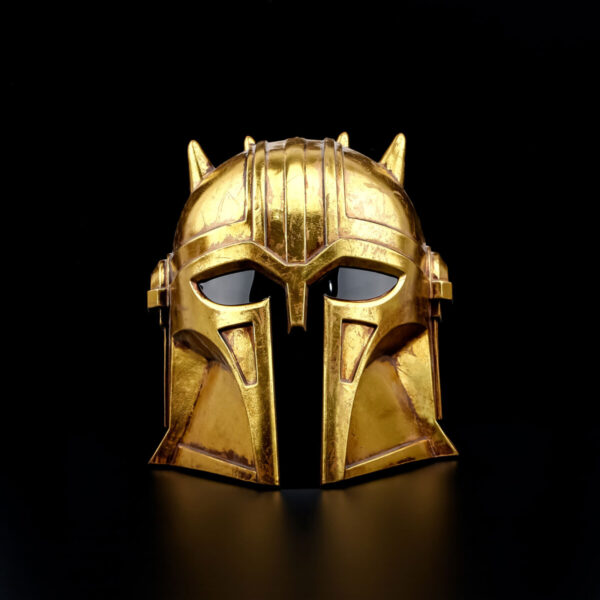
A helmet does the opposite job. It carries the silhouette, the visor cut, the ear-cone flare — the immediate visual shorthand that tells the room which side of the galaxy you're on. On a shelf it reads as a bust; on the head it reads as identity. A helmet is the character's face when the character has chosen not to have one.

What a helmet won't do on its own is settle the question of readiness. Without a weapon in hand, a Mandalorian in full beskar reads as neutral — armoured, watchful, not yet committed. That reading is deliberate for some builds. For a duelling collector, it's a wall the pose keeps hitting.

i

Key takeaway

A helmet turns a saber from a solo prop into a costume. Costume-ready shifts your collection from displayable to wearable — and that shift is where fans stop being spectators and start being characters.

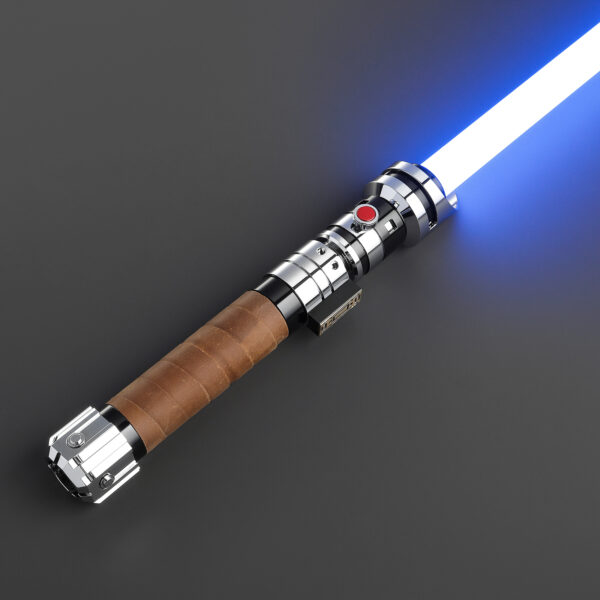
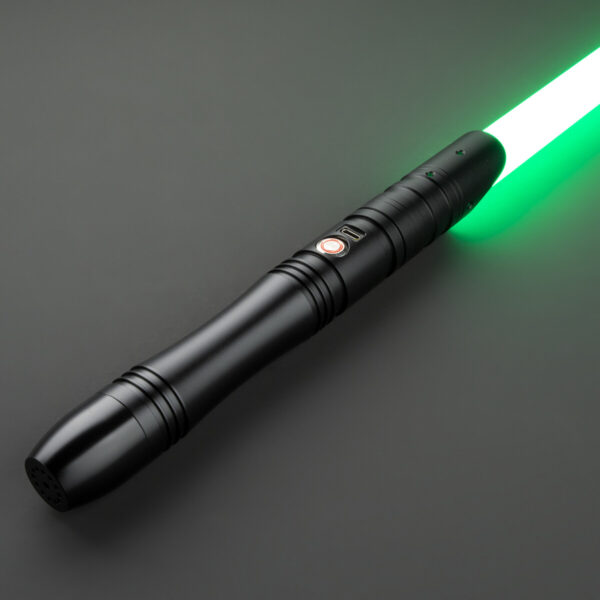
Apprentice Black Duelling Lightsaber — RGB-X Core
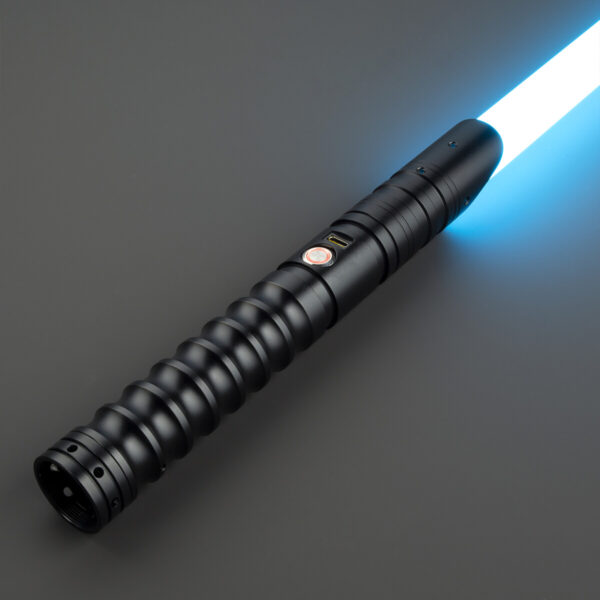
Fig. 1 Apprentice Black Duelling — RGB-X Core. Heavy-duel blade, matte hilt.
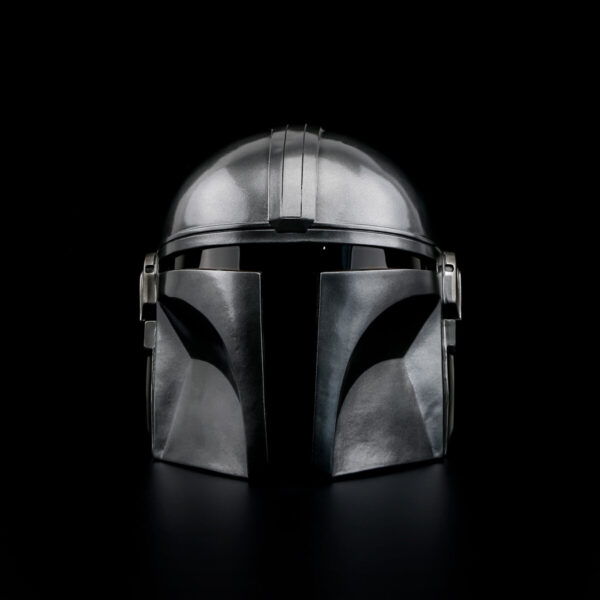
Mandalorian Helmet
Fig. 2 Mandalorian Helmet. Beskar-inspired T-visor, wearable-scale.

Why the pair works

Blade and mask are the two halves of the same declaration: this is who I am, and this is what I carry. One without the other is a fragment. Together they resolve into a whole silhouette — the outline you'd recognise from across a hall, in low light, in a still frame. That silhouette is what fans respond to, and it's what makes the collection feel lived-in rather than displayed.

There's a practical side too. A helmet extends how you can enjoy the saber. Con day, photoshoot, backyard duel, video reel — every one of those needs both hands full and a face committed. The pair unlocks contexts the saber alone can't reach.

Three pairings we love

  1. Beskar mask + heavy-duel blade Mandalorian Helmet paired with the Apprentice Black Duelling in RGB-X. The most versatile combination on the site — reads as bounty hunter, reads as duellist, reads as neutral watcher depending on the pose.
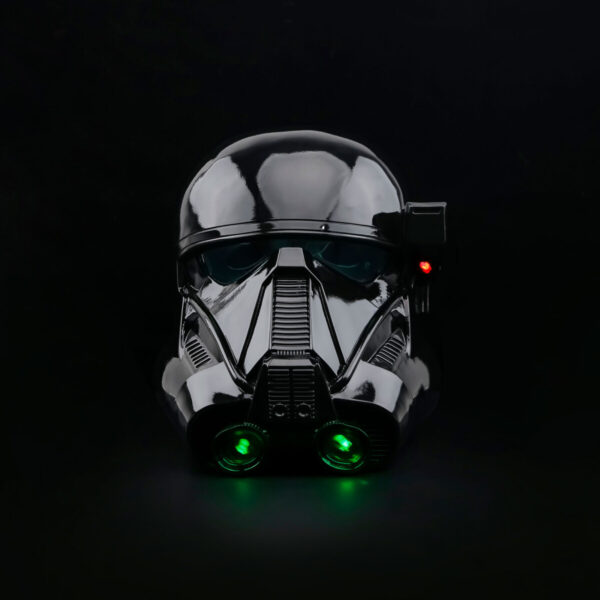
  2. Death Trooper visor + Xenopixel V3 Imperial elite silhouette. Death Trooper Helmet plus a Xenopixel V3 blade for the depth of colour a matte-black armour set demands. This is the con-photo build.
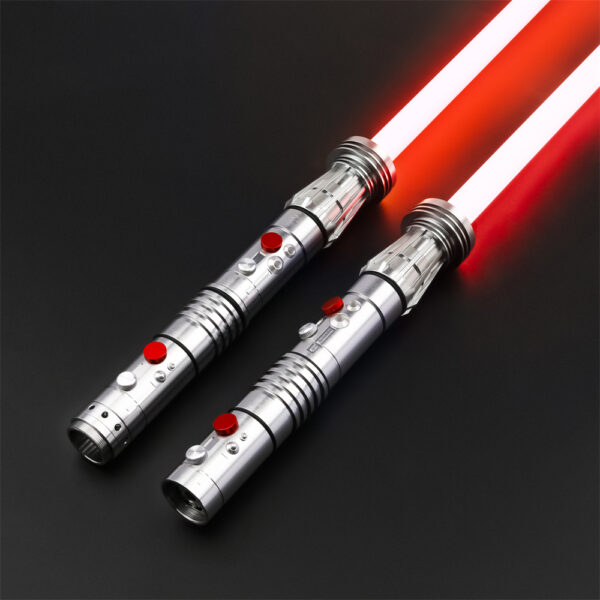
  3. Armorer's forge-mask + SNV4 Pro Darksaber Mandalorian Armorer Helmet paired with a SNV4 Pro Darth Maul double-bladed for the collectors reaching for lore rather than film accuracy. The rarest silhouette we stock.

The upshot

You do not need a helmet to enjoy your saber. Plenty of collectors will never wear either. But if you've ever taken the blade off the stand, held it in the mirror, and felt that quiet gap where the character should be — a helmet is what closes it. Not decoration. Not upsell. Completion.

May the force be with you both.

03 Worked example — Long-form editorial (Lore & Short Stories)

Lore & Short Stories

Claim the Blade. Wear the Mask. Live the Myth.

One night. One choice. One decision that would change everything.

The workshop smelled of ozone and warm metal — the after-scent of a long day at the bench and the low hum of coolant running through the pixel-strip housing. Cassian did not remember switching on the overheads. The light he was working by came from the blade itself, laid flat across the felt-lined tray, its emitter pointed away from him the way a good gunsmith angles a barrel. A soft orange bloom licked the underside of the shelf above. It was the only warm thing in the room.

He had built sabers for other people for six years. Every hilt in the case behind him had gone out the door strapped to a stand, wrapped in tissue, tucked into a foam-lined case addressed to a fan somewhere in Toronto or Perth or Malmö. He had never kept one. That was the rule. The blade you make is the blade you send. A saber-smith who hoards his own work is a saber-smith who has forgotten who the myth belongs to.

The bench

The bench itself was older than the workshop. His grandfather's woodworking bench, brought over on a container ship in 1994, the top scarred by three generations of chisels and now three years of pixel-strip solder. The vice at the near end still turned smoothly. The one at the far end had seized the summer his father died and Cassian had never gotten around to freeing it. There were rings under the coffee mug where the mug had sat every evening since. There was a smell of pine sap under the ozone, if you knew to look for it.

Every crystal wants something. This one wanted silence.

from The Fragments of Cassian

Tonight the bench held one blade. A Xenopixel V3 Core, custom carbon housing, a hilt he had machined from a solid billet across two weekends in April. The colour was a matched pair — ember at ignition, deep-forge at hold, and a signature flicker on unlit that he had spent three evenings tuning until it looked less like a fault and more like breath. It was, he was privately certain, the best thing he had ever built.

He had not built it for a customer.


The choice

Two boxes sat on the shelf above the bench. In the left one, a stand — matte black, satin-buffed, the ARTSABERS mark scored into the base. In the right one, a helmet. Beskar-inspired, matte black, the visor line ruthlessly clean. He had built the helmet the same weekend as the blade, from a set of forming dies his father had left in the shed and a resin cast he had never quite trusted until now.

The choice was simple. The stand was the safe thing — put the blade on the wall, admire it in the mornings, treat the eight weekends of work as an artefact. The helmet was the other thing. The helmet was what happened when the maker stopped being the maker and became the character. It was what he had not let himself do for six years.

He picked up the blade.

Every crystal wants something. This one wanted silence.

from The Fragments of Cassian

His grandfather had said that. His grandfather had been talking about a chisel at the time — a fluting chisel that had rolled off the bench and stopped just short of Cassian's ten-year-old bare foot, and his grandfather had picked it up, turned it over, handed it hilt-first to the boy and said the line with the weight of someone who had been waiting years to say it out loud. Cassian had not thought about it in a decade. It came back tonight like an unshielded arc.

The workshop, at midnight

He walked to the shelf. Took down the helmet. Set it on the bench beside the blade. The visor caught the ember bloom and threw it back at the ceiling in a long slow band, and for a second the whole workshop was lit the colour of a forge at dawn. Then the blade cycled to its idle flicker and the room went dim again, and it was only him, and the bench, and two objects that were about to become a person.

He fit the helmet over his head. The lining was warm from the packing foam. The T-visor cut narrowed his field of view to a single band of ember-lit room. He picked up the blade a second time — this time with the grip his father had taught him, the grip his grandfather had taught his father, the grip he had never once used on a customer's blade because a customer's blade is not yours to hold like that.

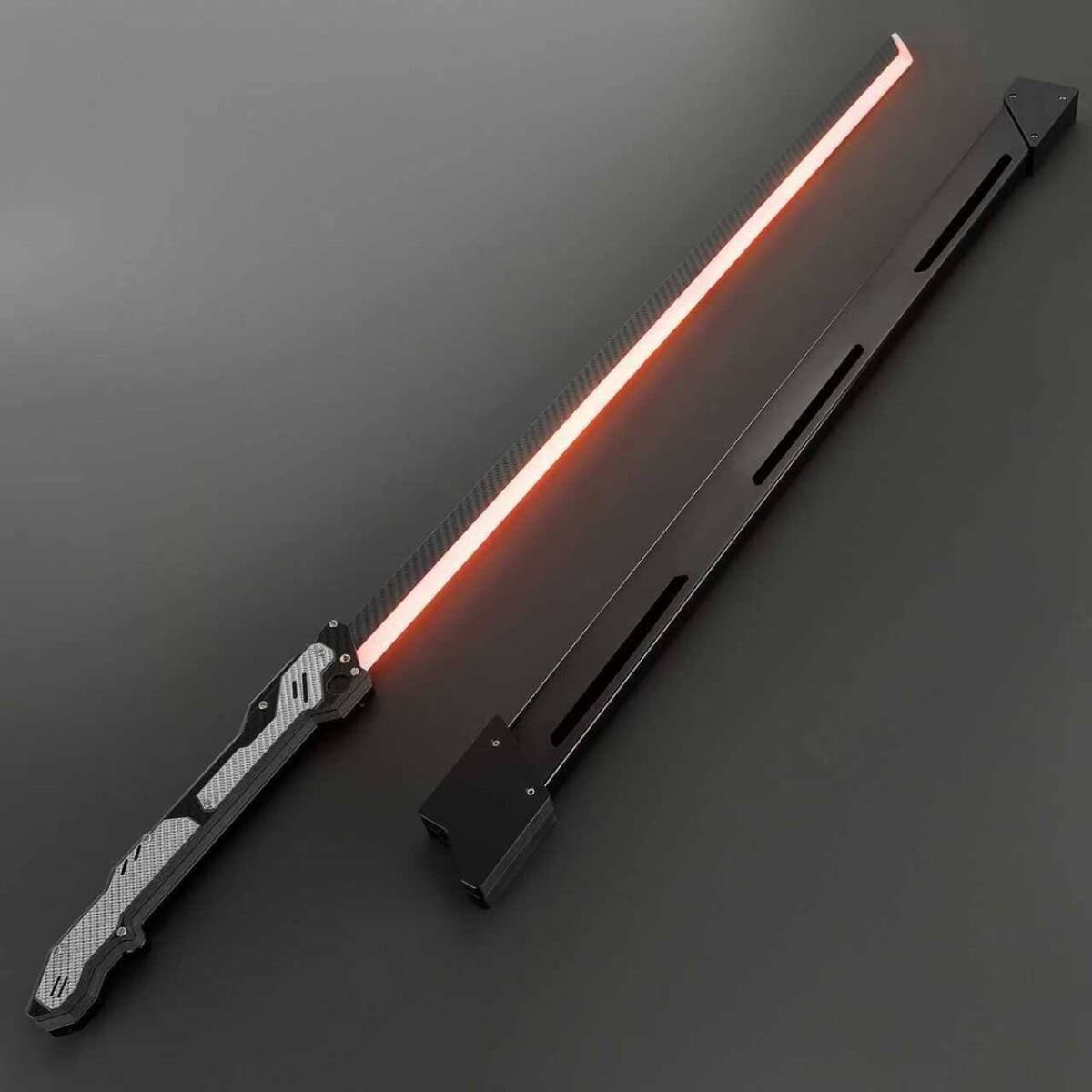
Fig. 1 The blade at hold — Xenopixel V3, custom carbon housing.

The blade ignited to full. The visor caught it. The workshop caught it. Somewhere in the dark space above the shelf a small metal thing — a hex key, probably — rolled off a ledge and hit the concrete floor with a bright ringing note that sounded, for one absurd second, like an answering hum.

Cassian stood in the middle of the workshop and did not move. He let the blade hum. He let the visor cast the room in orange. He let himself be, for the first time in six years, the thing he had been building for other people.
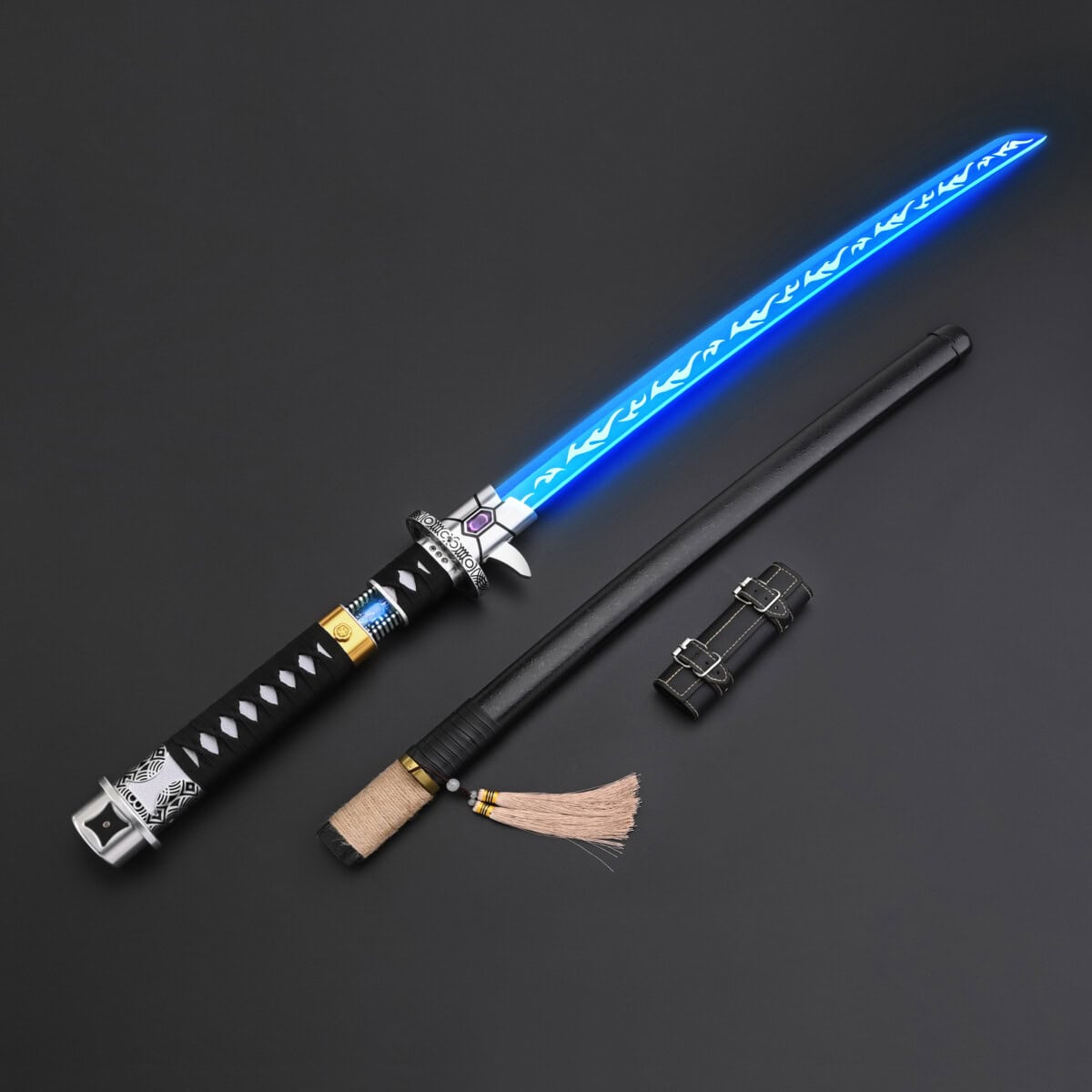
Fig. 2 The workshop at midnight, seen from the far bench.

The morning after

He put both objects away before the sun came up. The blade went back into its case on the bench. The helmet went back on the shelf. He shut the workshop, locked the door, walked the two hundred yards down the yard to the house, and slept for the first time in three weeks without the low grinding worry he had been carrying since April.

In the morning he cancelled a customer order. Not a large one — a repeat client, a good one, the kind who would forgive a delay. He would build the replacement over the next fortnight. But the blade on the bench was already spoken for.

It was his.

Every crystal wants something. This one wanted silence.

from The Fragments of Cassian

He does not display it on a stand. He wears it on the belt some evenings, when the workshop is quiet and the yard is empty, and once — only once — he carried it out to the fence at the edge of the property and ignited it under the stars, and stood for a long time in the dark with the helmet catching the light, and did not think of anything at all.

That is the story of how the maker became the myth.

Yours is waiting to be built.

— Chloe
Continue the story

The Weight of Two Blades: A Zabrak's First Ignition →

Read next

Patterns appendix · v1.0

Every pattern the article template holds.

Composable. Any article can use any subset. Each panel below shows one pattern in isolation, at rest on the page ground, with the annotation notes a writer or designer needs to choose it correctly.

01 Typography scale

The reading-surface type stack. Every article inherits from this ladder; nothing outside it renders in body prose.

Hero display · full-bleed

Space Grotesk 500
72px / 1.05

Hero display · compact

Space Grotesk 500
48px / 1.1

Article body H2

Space Grotesk 500
32px / 1.2

Article body H3

Space Grotesk 500
24px / 1.25

Article body H4

Space Grotesk 500
20px / 1.3

Body large — the lead paragraph opens at this scale to invite the reader into the piece.

Manrope 400
20px / 1.6

Body regular — the main reading surface. Sits at 68ch max-width. Manrope reads well long-form at this scale on dark grounds.

Manrope 400
18px / 1.65

Body small — captions, byline meta, share-row context, footer copy.

Manrope 400
14px / 1.5

02 Pull-quote — large

Full-width, centred. Space Grotesk 40px. Ember hairline top and bottom, soft ember bleed above and below. Used once per long-form article at most, at ~40% scroll.

"You do not choose the blade. The blade chooses the hand that carries it."

03 Pull-quote — inline

Half-width, side-pulled variant. Space Grotesk 26px, ember rail on the pulled side. Body wraps around it.

A saber-smith who hoards his own work is a saber-smith who has forgotten who the myth belongs to.

The workshop had been quiet all evening. Cassian worked the last bead of solder into place with the patience of someone who no longer noticed the passing of hours, only the changing pitch of the coolant hum behind the bench. There was a smell of pine sap under the ozone if you knew to look for it. He had not switched on the overhead light in three hours. The blade lit the room enough. That was, he thought, a sign that the work was going well.

04 Blockquote — attributed & unattributed

Manrope body, left indent, ember rail on the left. Attributed variant carries an em-dash + source line in Space Grotesk micro-caps.

"The Kyber sings to those who listen."

Ancient Jedi Codex, unnumbered fragment

The Kyber sings to those who listen.

05 Callout box — three variants

Ember-bordered card with an ember icon chip top-left. Three variants: KEY TAKEAWAY, DID YOU KNOW, CAUTION. CAUTION uses forge-red hairline in place of ember.

i

Key takeaway

A helmet turns a saber from a solo prop into a costume. Costume-ready shifts your collection from displayable to wearable.

i

Key takeaway

A helmet turns a saber from a solo prop into a costume. Costume-ready shifts your collection from displayable to wearable — and that shift is where fans stop being spectators and start being characters.

!

Caution

Heavy-duelling blades are rated for direct saber-on-saber contact. Baselit RGB blades are display-grade; check the duelling grade on the product page before pairing them for a sparring build.

06 Inline image + caption

Image at body max-width (68ch container), 16:10 crop, ember Fig-mark on caption. Small muted body text below.

Starkiller V3 Lightsaber — Xenopixel V3
Fig. 1 Starkiller V3 — Xenopixel V3 Core. One of the flagship builds in the summer 2026 catalogue.
07 Image pair

Two images side-by-side at body max-width, gutter between, one caption per image. Stacks vertically on mobile.

Fig. 1 Apprentice Black Duelling — RGB-X.
Fig. 2 Mandalorian Helmet, beskar-inspired.
08 Full-bleed image break

Image at 100vw, breaks out of body max-width, ember hairlines top and bottom. Optional muted caption below at body max-width. Used at ~75% scroll on long-form pieces.

Fig. 1 Full-bleed break — Carbon Strike, Xenopixel V3.
09 Drop-cap

Space Grotesk display, ember, 5 lines tall on the first paragraph. Used on every article across all modes and categories.

The workshop smelled of ozone and warm metal. Cassian did not remember switching on the overheads. The light he was working by came from the blade itself, laid flat across the felt-lined tray, its emitter pointed away from him the way a good gunsmith angles a barrel. A soft orange bloom licked the underside of the shelf above.

10 Section break — hairline & dots variants

Ember hairline, 60px vertical margin, no text. Alternate variant renders three ember dots for softer transitions inside a scene.

…the last bead of solder set, the coolant hum steady.


By morning he had made his choice.


The workshop was quiet again.

11 Lists — bulleted & numbered

Bulleted lists carry an ember square marker with soft glow. Numbered lists render the number in Space Grotesk display, letter-spaced, decimal-leading-zero.

Bulleted

  • Baselit RGB-X Core — infinite blade colours and Bluetooth as standard.
  • Xenopixel V3 — 30+ sound fonts and pixel-strip depth.
  • SNV4 PRO — the duelling collector's default choice.
  • Proffie 2.2 — the top tier for fully custom builds.

Numbered

  1. Beskar mask + heavy-duel blade Bounty hunter / duellist silhouette.
  2. Death Trooper visor + Xenopixel V3 Imperial elite. The con-photo build.
  3. Armorer's forge-mask + SNV4 Pro double-blade The lore-first collector's build.
12 Byline row

Avatar (36×36 ember-bordered circle) + author name (display) + separator dot + date (muted body) + separator dot + reading time (muted body). Chrome only — no author-bio bar, no "Written by" prefix.

13 Category chip

Uppercase Manrope, letter-spaced, ember hairline border, ember dot at 8px. Sits in the hero as the article's category badge and inside related-articles cards.

ARTSABERS News Lightsaber Guides & Tips Lore & Short Stories
14 Tag chip row

Four to six tags, uppercase Manrope small, ember hairline border, chrome-warm text on carbon ground. Sits above the share row in the article footer.

15 Share row

Four buttons horizontal: X, Facebook, Reddit, Copy link. Icon-only on desktop; native share overlay on mobile via Web Share API. No LinkedIn, no WhatsApp, no share-count numbers.

16 Related-articles card

3-up card. Each card = featured image + category chip + title + reading time. Ember-hairline separators between cards. Section eyebrow: "MORE FROM THE BLOG" (plain).